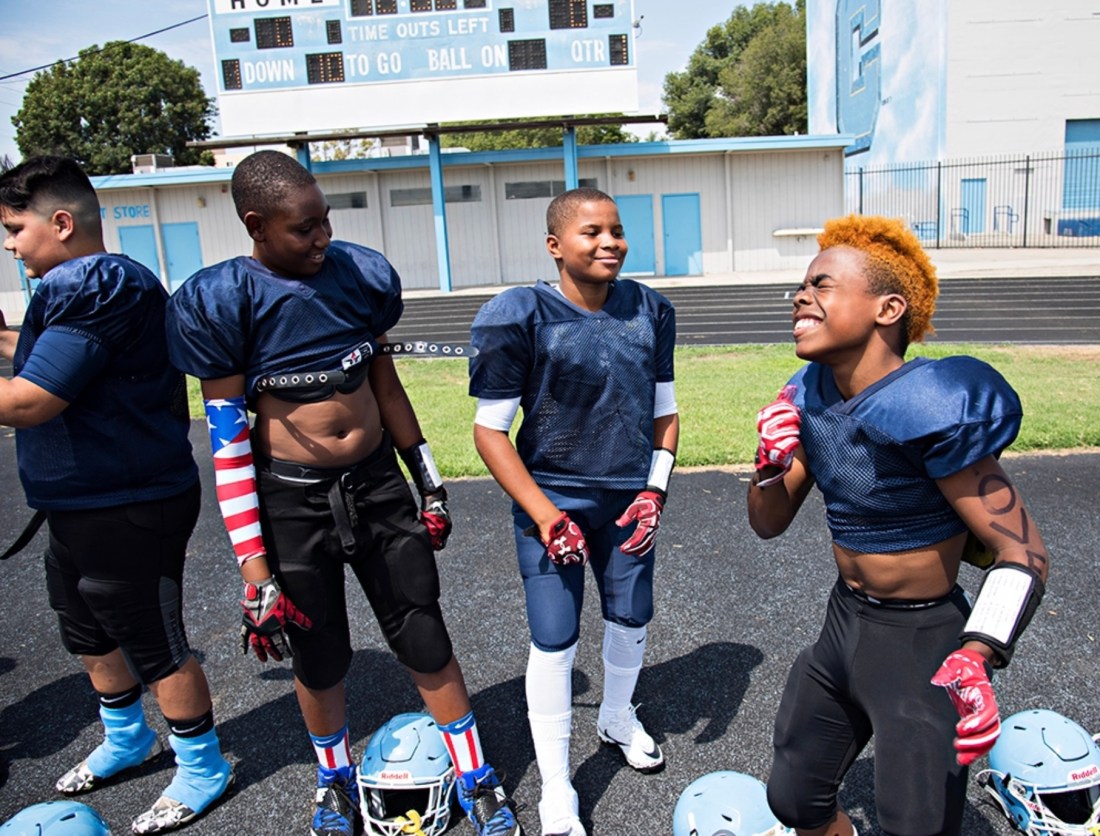
Bunchie Young, right, orange hair, is now 12 years old with mutiple scholarship offers. But, he reminds us that he is still just a kid as he dances on the sideline.
Bunchie Young. Havon Finney Jr,. Titan Lacaden. Isaiah Marshall. By now, you’re probably wondering what these names have in common. The answer is simple; they have all received college scholarship offers to play football. But what is more significant is that none of these kids are even in eighth grade yet, let alone high school. Isaiah Marshall, age 14, the oldest of the group, was in seventh grade when he received and offer from the University of Michigan. Maxwell “Bunchie” Young was 10 years old when he received his first offer from Illinois. Havon Finney Jr, was nine when he received a full-ride offer to the University of Nevada. Titan Lacaden was nine years old when he received an offer from University of Hawaii. While these kids should be very proud of how successful they are, there is a lot of controversy around recruiting at such a young age. People wonder “Why is this a bad thing? These kids have been working hard and they deserve to be rewarded.” However, the controversy surrounding this is that the offers could be added stress to these young kids lives. But, on the other hand, this could keep them on the path to college, having already been guaranteed a spot.
Twenty years ago, if someone would have said that a nine year old would be offered a scholarship to college, they would have thought they were crazy. Now, it is still crazy, but accepted. But, these days, kids are also training at a higher level at a younger age. In order to be able to compete at the eighth grade level for basketball, you must be training at least four times a week, at the very minimum. To play above your grade level, you will probably be training every day. And that’s what players are doing now. Even to just play in high school, you have to do weight or strength training a couple times a week, on top of skills training, and all of that on top of maintaining a good grades. If your grades drop below 2.0 GPA, then you become ineligible to play until your grades get backup. Even if you are failing one class but have all A’s otherwise, you cannot play until you are passing every single class. This may not seem very hard to do, but with all the training there is hardly time for homework.
So is recruiting young beneficial or harmful? Many argue that it is a good thing, as it can keep kids motivated and on the path to college. But, on the other hand, not all athletes that are receiving offers are mature enough to make these decisions and handle all the pressure of being a top recruit. Also, so many things can change over the course of four years. A coach can be fired, there can be scandals, someone could make a better offer, even a family matter could keep someone from moving across the country for sports. Or the athlete could change what they want to do. They could go from wanting to be a doctor to a lawyer to a trainer and feel that a different school would fit best. Although, recently young men who play basketball have started doing the “one and done.” Being a one and done is when you just make a pitstop at a college for a year, because the NBA says you have to. So, kids aren’t really picking a school based on the academics as much as the athletics. But, it is during the athletes senior year when they sign their letter of intent to attend the college. Until then, their only commitment is their word, which is non-binding and they can back out at any time.
With the recruiting process starting younger and younger, kids are feeling more pressure to receive an offer. When someone in their grade has already committed or is receiving offers, they start comparing themselves. They start working harder and playing with a chip on their shoulder, which are both goods things. But, they also start sacrificing their well-being and health of their body in order to train more or show scouts that they can push through pain. This can lead to long term problems. Take Giddings Harrison, for example. During her sophomore season, Harrison suffered bilateral labral tears in her hips. But, she was avoiding surgeries because she wanted to showcase her talent to scouts during tournaments. Many of her peers had already verbally committed, and she was starting to feel pressured to do so. She had two cortisone shots, and her doctors refused to give her a third. But, playing through it and postponing surgeries ended up costing Harrison a Division I offer. If she had had surgery when she first got her diagnosis, she may have recovered sooner and still had a chance at DI. In the end, Harrison had two hip surgeries and ended up playing for the D-III college Washington and Lee.
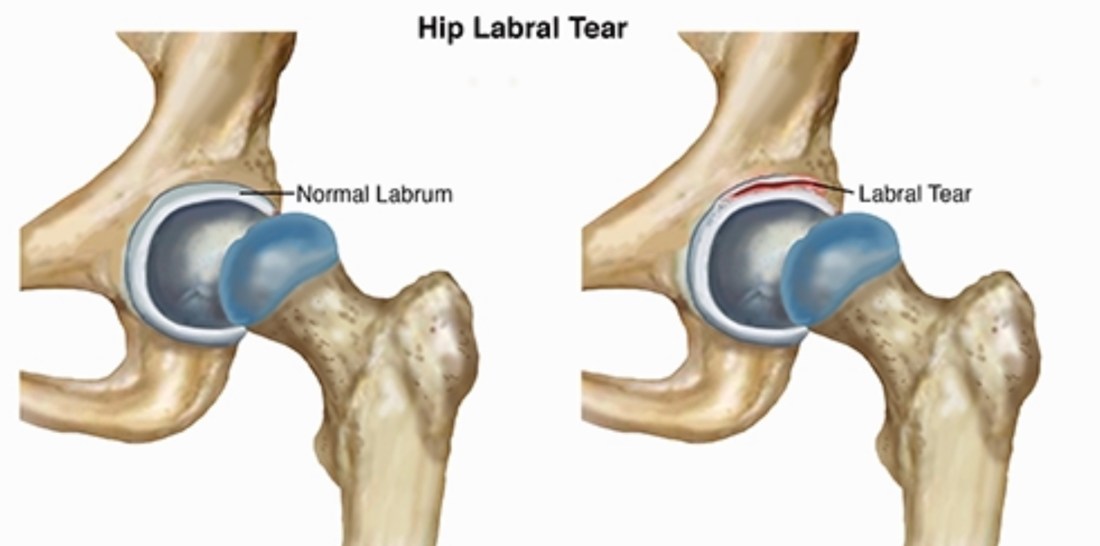
Giddings Harrisons’ hip injury, a bilateral labral tear, pictured above.
Colleges offer scholarships to young athletes because they want them to commit to them early. But what is really best for the student-athletes? They commit early to take themselves off the market and stop receiving communications from other schools. But would it truly be better to wait or is it actually better to commit as soon as possible? Once a student-athlete has committed, schools will stop having them on campus for official visits. When a student-athlete is on an official visit, the college is paying for it. But, if the student-athlete is already committed, the school will not pay for it. You can still go, but you will have to pay your own way.
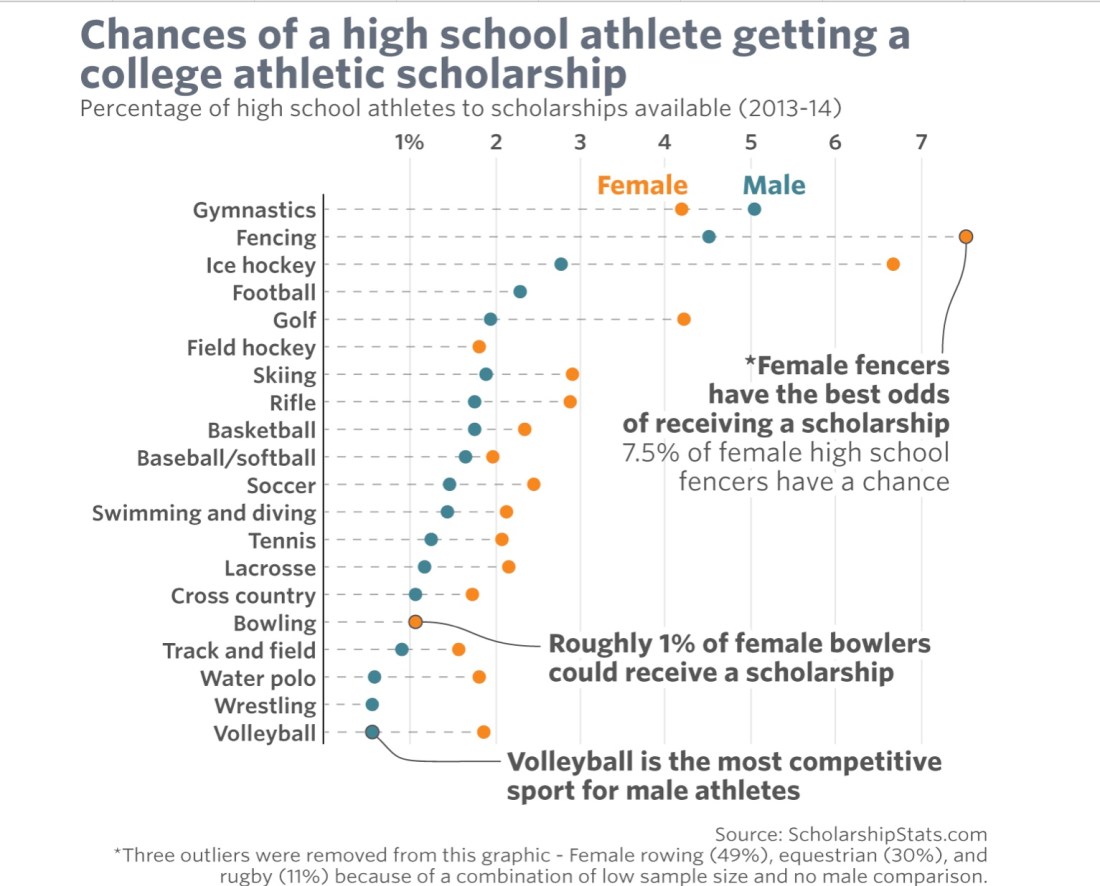
This chart shows the chances of an athlete getting a college scholarship, relative to their sport.
Bob Scalise, along with many other college coaches, suggested that a rise in transfer rates could be due to the recruiting process starting younger. It makes sense, because there are many things that change at a college between eighth grade and senior year. The good thing, though, is that kids cannot officially commit until the National Letter of Intent signing day of their senior year. This can help prevent premature commitment for kids who have not done much research on their college offers. But, once a kid commits, they are not likely to back out of this offer, because other coaches have stopped trying to contact them.

 Here to Play